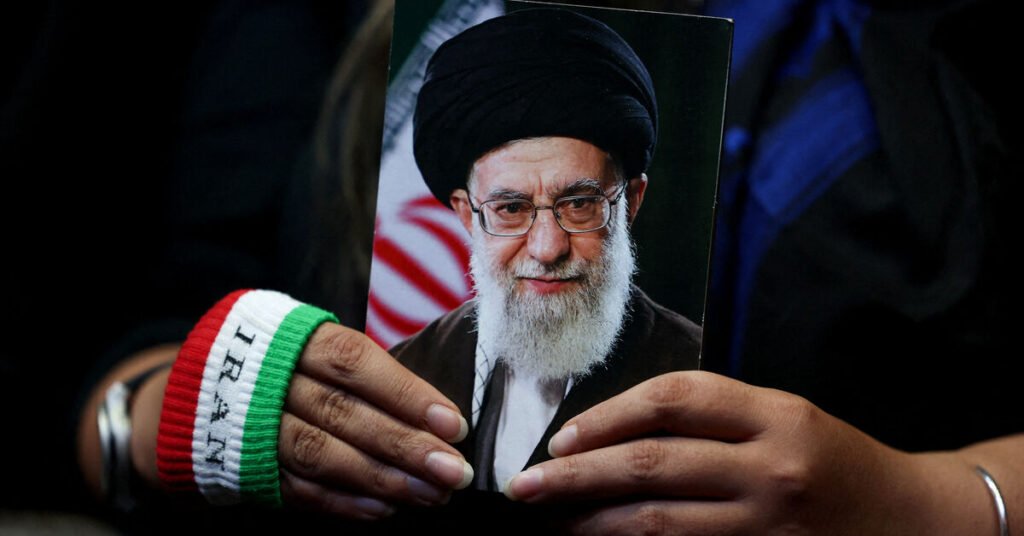
DUBAI, July 2 (Reuters) – In a significant escalation of rhetoric, an Iranian military commander issued a stern warning to the United States and Israel on Thursday, cautioning against any military actions targeting Iran. This ominous statement comes in the lead-up to the state funeral of Supreme Leader Ayatollah Ali Khamenei, who recently lost his life in devastating airstrikes that occurred on the first day of a tumultuous week for the nation.
Brigadier General Amir Ali Hajizadeh, the commander of the Islamic Revolutionary Guard Corps (IRGC) Aerospace Force, conveyed a message of defiance during a press conference held in Tehran. He emphasized that Iran would respond decisively to any perceived aggression from foreign adversaries, particularly the U.S. and Israel, whom he accused of plotting against the Islamic Republic. “If they make a mistake, they will face a response they have never seen before,” Hajizadeh warned, reflecting the heightened tensions in the region.
The backdrop to this military posturing is the nation’s collective grief following Khamenei’s death, a pivotal moment in Iranian politics and society. Khamenei, who had served as the Supreme Leader since 1989, was a central figure in Iran’s theocratic regime and played a crucial role in shaping its domestic and foreign policies. His passing has left a significant power vacuum and uncertainty regarding the future leadership of the country.
Nation in Mourning
The state funeral, set to attract millions of mourners, is expected to be a highly charged event. Many citizens view Khamenei not only as a political leader but also as a spiritual guide. The processions will serve as a platform for the Iranian government to reinforce its narrative of unity and resilience in the face of external threats.
In the wake of Khamenei’s death, the Iranian regime has intensified its rhetoric against what it perceives as hostile actions from the West. The airstrikes that killed Khamenei have been attributed to a coordinated effort by Israel, with some analysts suggesting that the attack was aimed at destabilizing the Iranian leadership during a time of vulnerability. This kind of military action, while not uncommon in the fraught history of U.S.-Iranian relations, has provoked a fierce response from Iranian officials.
International Reactions
The international community is closely monitoring developments in Iran, with particular attention to the potential for further escalation in military confrontations. The U.S. and Israel have historically maintained a stance of caution when it comes to Iranian affairs, yet the current situation presents a complex challenge. Analysts suggest that both nations may weigh their options carefully, as any military engagement could lead to significant geopolitical ramifications.
Meanwhile, Iranian officials have reiterated their commitment to their nuclear program and regional influence, signaling that they will not back down in the face of external pressure. “We will continue our path, and no one can stop us,” Hajizadeh declared, underlining the IRGC’s pivotal role in Iran’s defense strategy.
A Fragile Future
The Iranian leadership is now faced with the dual challenge of managing an internal power transition while simultaneously addressing external threats. As the nation prepares for Khamenei’s funeral, the atmosphere remains charged with both sorrow and defiance. The coming days will likely reveal how Iran navigates this precarious moment in its history, as the world watches closely for any signs of instability or aggression.
As the funeral processions draw near, the Iranian populace is expected to display a mixture of mourning and patriotism, reinforcing their resolve against perceived foreign adversaries. The warning from Hajizadeh serves as a stark reminder that the geopolitical landscape remains fraught with tension, with Iran poised to respond to any actions it deems hostile during this critical juncture.
This article was originally aggregated from the source listed below.
Read Full Article on Al-Monitor – Middle East Politics & News →