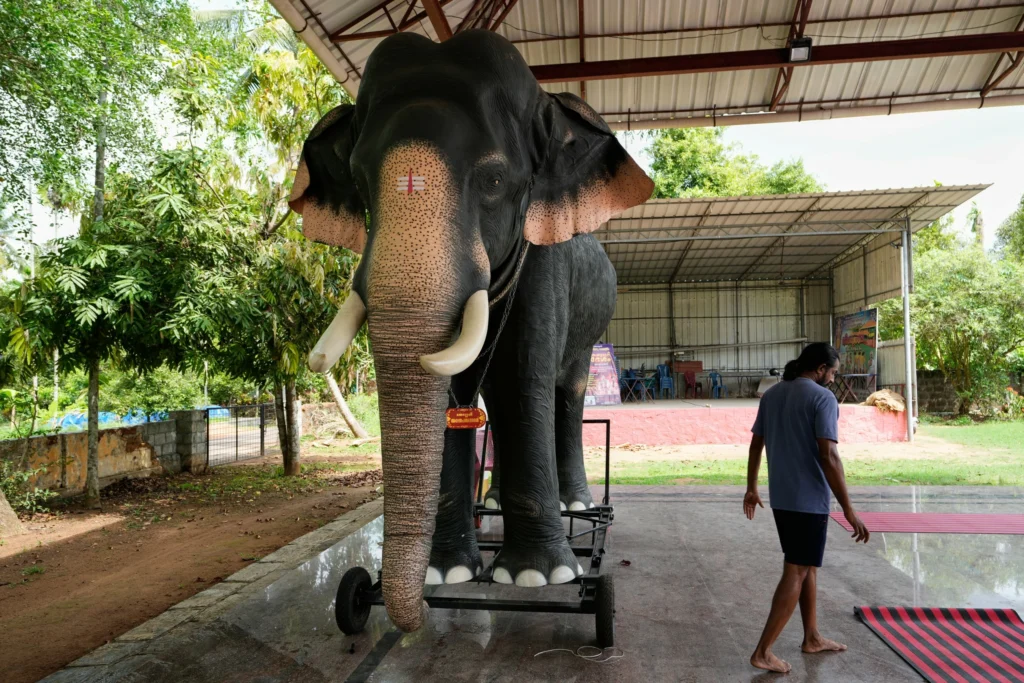
In a striking blend of technology and tradition, life-size robotic elephants crafted by Prasanth Prakashan have begun to capture the attention of devotees and visitors in various Hindu temples across India. These mechanical marvels, complete with flapping ears, swishing tails, and water-squirting trunks, have sparked both admiration and controversy, as they challenge conventional notions of reverence and spirituality in religious spaces.
The Birth of a Robotic Innovation
Prasanth Prakashan, a visionary artist and engineer, has dedicated his backyard workshop to the production of these animatronic elephants. Made primarily from fiberglass, they are designed to mimic the physical attributes of real elephants, which hold significant cultural and spiritual value in Hinduism. In many traditions, elephants are viewed as manifestations of the divine, embodying qualities such as strength, wisdom, and loyalty.
Prakashan’s creations boast a range of features that enhance their lifelike appearance. The robotic elephants can move their limbs, flap their ears, and even spray water, captivating onlookers with their lifelike movements. These features have made them a popular attraction, drawing crowds eager to witness the intersection of artistry and technology.
Gaining Popularity in Temples
As word spread about these robotic wonders, several temples in India began incorporating them into their festivities and rituals. The response has been overwhelmingly positive in many cases; families flock to these temples, eager to photograph their children alongside the robotic elephants, creating a new kind of interactive experience that bridges the gap between the physical and the digital.
Temples have reported increased foot traffic, with many visitors expressing delight at the novel addition to traditional ceremonies. “It’s a unique way to engage with our culture,” commented a temple priest in Tamil Nadu, where one of the first robotic elephants was installed. “They attract younger generations who might not connect with the rituals in the same way their parents did.”
The Controversy Surrounding the Innovation
However, the introduction of robotic elephants has not been without its detractors. Critics argue that these animatronics undermine the sanctity of religious practices. Some traditionalists view them as a commercialization of spirituality, fearing that the emphasis on entertainment may detract from the deeper meanings and rituals associated with worship.
- Concerns have been raised about the potential for these robots to replace real-life rituals that involve genuine animal participation, such as processions featuring living elephants.
- Others worry that the presence of robotic figures could lead to a dilution of cultural heritage, where the sacred becomes overshadowed by spectacle.
In response to these criticisms, Prakashan emphasizes that his creations are intended to complement rather than replace traditional practices. “My goal is to enhance the experience of spirituality, not to detract from it,” he remarked. “These elephants are a celebration of our culture and a way to attract attention to our rich heritage.”
A Future of Technological Integration
As the debate continues, the future of robotic elephants in Indian temples remains uncertain. While some temples may choose to embrace this new technological trend, others may opt to uphold more traditional practices. Regardless of the outcome, Prakashan’s innovation has undoubtedly sparked a conversation about the role of technology in spirituality and the evolving nature of cultural expressions in a rapidly changing world.
In an era where the lines between tradition and modernity are increasingly blurred, the robotic elephants serve as a fascinating case study of how innovation can intersect with age-old beliefs, prompting both celebration and reflection within India’s rich tapestry of spirituality.
This article was originally aggregated from the source listed below.
Read Full Article on Gulf Today – Latest News →