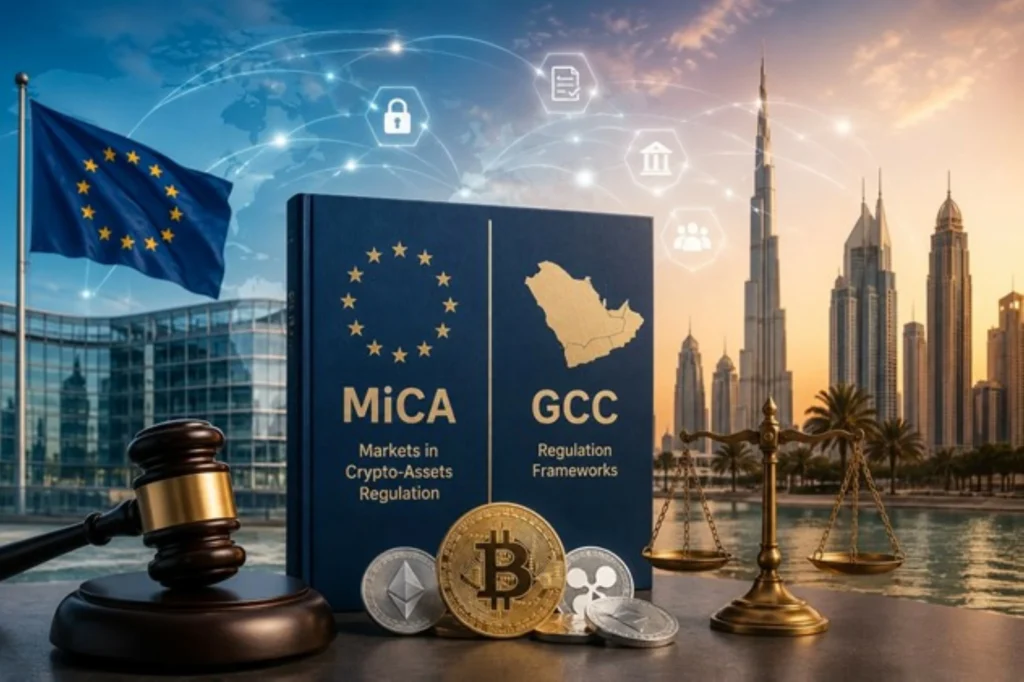
Crypto-assets Through the Lens of EU and GCC Regulations
In recent years, the cryptocurrency market has experienced a remarkable surge, capturing the attention of investors and governments alike. With Dubai emerging as a significant hub for crypto trading and investment, the landscape for digital assets is evolving rapidly. As interest in cryptocurrencies continues to grow, so does the urgency for comprehensive regulatory frameworks that can provide clarity and security to both investors and industry players. This need for regulation is not only felt in the Gulf Cooperation Council (GCC) region but also resonates within the European Union (EU), where authorities are grappling with the implications of this burgeoning market.
The Rise of Dubai as a Crypto Hub
Dubai has positioned itself at the forefront of the crypto revolution, attracting a myriad of startups, investors, and blockchain enthusiasts. The city’s strategic initiatives, such as the Dubai Multi Commodities Centre (DMCC) Crypto Centre, have created a conducive environment for crypto businesses to thrive. This proactive approach has led to a significant influx of talent and capital in the region, further solidifying Dubai’s status as a global crypto hub.
However, the exponential growth of the crypto market has also raised concerns regarding consumer protection, financial stability, and the potential for illicit activities. As a result, the necessity for regulatory frameworks that can effectively govern the crypto landscape has become paramount. The challenge lies in creating regulations that not only protect investors but also foster innovation and growth within the industry.
Regulatory Developments in the EU
On the other side of the spectrum, the European Union is actively working to establish a cohesive regulatory approach to address the complexities of the crypto market. The EU’s proposed Markets in Crypto-Assets (MiCA) regulation aims to create a harmonized framework across member states, addressing issues such as transparency, market integrity, and investor protection. This initiative reflects the EU’s commitment to ensuring that the crypto market operates within a safe and secure environment while promoting innovation.
MiCA is expected to provide a comprehensive set of rules for crypto-asset service providers, including exchanges and wallet providers. By establishing clear guidelines, the EU hopes to eliminate regulatory arbitrage, where businesses might exploit differing regulations in various countries. This unified approach is seen as a crucial step towards creating a more convergent global crypto market, which could ultimately enhance investor confidence and participation.
Convergence of Regulatory Frameworks
The convergence of regulatory frameworks between the EU and the GCC could have far-reaching implications for the global crypto market. As both regions work towards establishing robust regulations, collaboration and information sharing will be essential. By aligning their regulatory approaches, the EU and GCC can create a more integrated market that benefits from the strengths of both regions.
- Collaboration Opportunities: Joint initiatives and partnerships between EU and GCC regulatory bodies could facilitate knowledge exchange and best practices.
- Investor Confidence: A harmonized regulatory landscape can enhance investor trust, leading to increased participation in cryptocurrency markets.
- Innovation and Growth: Clear regulations can encourage innovation while ensuring that risks are managed effectively.
As the crypto market continues to evolve, the importance of effective regulation cannot be overstated. Both the EU and GCC are recognizing the need for frameworks that not only protect consumers but also foster a thriving environment for innovation. The future of crypto-assets will largely depend on how well these regions can navigate the complexities of regulation and work towards a more unified global market.
This article was originally aggregated from the source listed below.
Read Full Article on Gulf Today – Latest News →