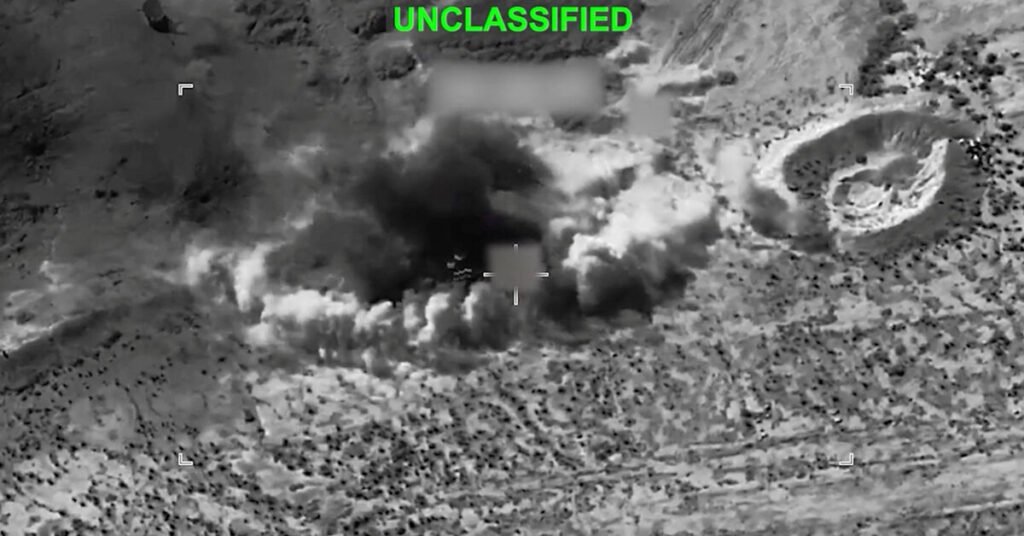
CAIRO/DUBAI, July 15 (Reuters) – In a significant escalation of tensions in the Middle East, the United States has launched a new wave of military strikes against Iranian targets, coinciding with the reimposition of a naval blockade on Iranian ports. This development, announced on Wednesday, signals a marked increase in hostilities between Washington and Tehran, particularly as both nations navigate a fraught geopolitical landscape that has implications for global shipping and energy markets.
The U.S. government confirmed that the recent strikes were aimed at deterring Iran’s aggressive actions in the region, which have included attacks on commercial shipping vessels and threats to disrupt the flow of oil exports through the vital Strait of Hormuz. This strategic waterway is crucial for international trade, with approximately 20% of the world’s oil supply passing through it daily. The American military has emphasized that these operations are designed to protect maritime commerce and ensure the security of ally nations in the region.
In response to the renewed U.S. military actions, Iranian officials have issued stern warnings, suggesting that they may retaliate by further obstructing energy exports from the region. Iranian President Ebrahim Raisi declared that any threats to Iran’s security would be met with a decisive response, indicating that the country is prepared to escalate its military posture if necessary. “We will not allow our shipping routes to be compromised,” Raisi remarked during a press conference, reflecting the heightened sense of urgency in Tehran regarding the ongoing tensions.
The Broader Context of U.S.-Iran Relations
The most recent developments come against the backdrop of a long-standing adversarial relationship between the U.S. and Iran, which has been marked by a series of confrontations and diplomatic failures. The U.S. withdrawal from the Joint Comprehensive Plan of Action (JCPOA) in 2018, followed by the reimposition of economic sanctions on Iran, has led to increased hostilities and a series of maritime incidents in the Persian Gulf.
Analysts suggest that the U.S. strikes reflect a strategic pivot aimed at reasserting American influence in the region while simultaneously signaling to Iran that aggressive actions will not be tolerated. “The U.S. is attempting to send a clear message that it will protect its interests and those of its allies, especially in light of recent provocations by Iranian forces,” said geopolitical analyst Fatima Al-Mansoori.
Implications for Global Shipping and Energy Markets
The potential for further escalation raises serious concerns for global shipping and energy markets, particularly as oil prices remain volatile. Shipping companies are already on high alert, with many considering alternative routes to avoid the Strait of Hormuz. The International Maritime Organization has urged countries to enhance their naval presence in the region to ensure the safety of commercial vessels.
Market analysts warn that prolonged conflict could lead to significant disruptions in oil supply, potentially driving prices higher and impacting economies worldwide. “Any significant disruption in the Strait of Hormuz could have a ripple effect across global markets,” cautioned energy analyst Omar Khoury. “It is essential for all stakeholders to seek a de-escalation of tensions before the situation spirals out of control.”
Looking Ahead
The international community is closely monitoring the situation, with calls for renewed diplomatic efforts to resolve the crisis peacefully. As the U.S. and Iran navigate this precarious moment, the stakes are high, not only for the nations directly involved but for the stability of the entire region and the global economy. The coming days will be critical in determining whether dialogue can prevail over conflict, or if the cycle of violence will continue to escalate.
This article was originally aggregated from the source listed below.
Read Full Article on Al-Monitor – Middle East Politics & News →