US Open to Negotiations Amid Escalating Iran Crisis
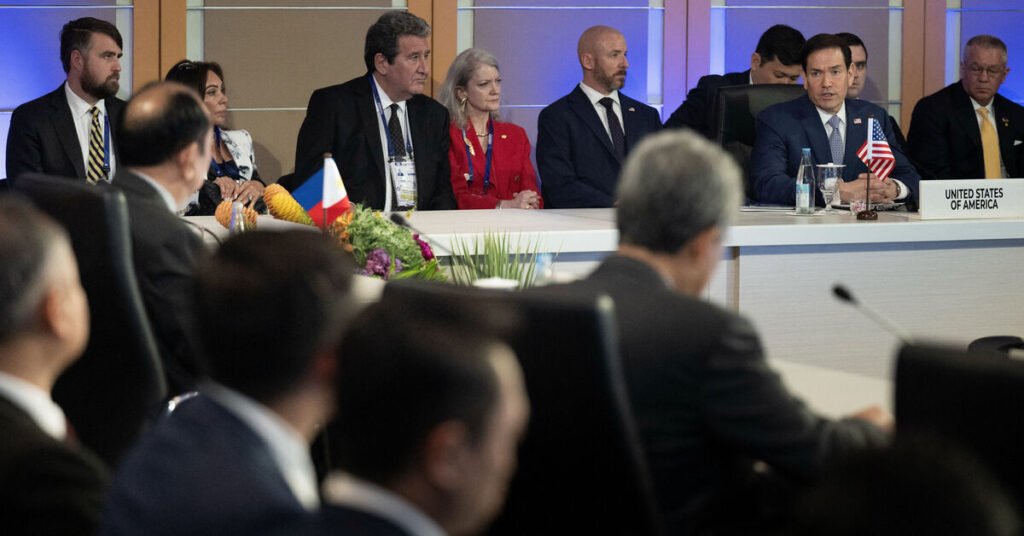
DUBAI/MANILA, July 22 (Reuters) – In a statement that underscores the United States’ ongoing diplomatic efforts amidst a tense geopolitical climate, U.S. Secretary of State Marco Rubio expressed on Wednesday that Washington remains open to negotiations aimed at resolving the escalating crisis with Iran. However, he emphasized that Tehran’s lack of seriousness in engaging in meaningful dialogue poses a significant barrier to achieving a peaceful resolution.
Rubio’s comments come at a time when the conflict surrounding Iran has intensified, raising concerns not only in the region but also across global markets. The situation has resulted in disruptions affecting two of the world’s most vital shipping routes, provoking fears of an economic fallout that could extend beyond the Middle East.
Context of the Crisis
The Iran crisis has been marked by a series of confrontations, including military skirmishes and heightened tensions over nuclear development. The U.S. has been vocal in its opposition to Iran’s nuclear ambitions, which it views as a direct threat to regional and global stability. In recent months, there have been numerous incidents involving Iranian vessels and U.S. Navy ships in the Persian Gulf, further complicating the diplomatic landscape.
Despite these tensions, Rubio maintained that the United States is committed to pursuing diplomatic avenues. “We are ready to engage in discussions that could lead to a de-escalation of the situation,” he stated during a press conference. “However, it is clear that Iran is not currently demonstrating a willingness to partake in constructive negotiations.” This sentiment echoes the frustrations of many U.S. officials who have witnessed Tehran’s continued military posturing and provocative actions.
International Implications
The ramifications of the Iran crisis extend far beyond the immediate regional concerns. As hostilities escalate, global oil prices have experienced volatility, prompting apprehension among oil-dependent economies. Analysts warn that sustained conflict could lead to a significant spike in crude oil prices, potentially destabilizing markets worldwide.
- Economic Impact: The disruption of shipping routes has raised the cost of transportation and insurance, affecting global supply chains.
- Security Concerns: The U.S. has increased its military presence in the region, signaling its readiness to protect its interests and allies.
- Allied Relations: U.S. allies in the region, particularly Israel and Saudi Arabia, are closely monitoring the situation, fearing that a nuclear-armed Iran could reshape the balance of power.
Call for a Unified Approach
As the crisis unfolds, Rubio called for a unified international approach to address the challenges posed by Iran. He urged allies to join the U.S. in applying pressure on Tehran to return to the negotiating table. “We must work together to hold Iran accountable for its actions and encourage it to engage in discussions that could lead to a more stable and secure Middle East,” he stated.
In conclusion, while the U.S. remains hopeful for a diplomatic resolution to the Iran crisis, the path forward appears fraught with challenges. The willingness of Tehran to engage in genuine negotiations will be crucial in determining the future of U.S.-Iran relations and the broader geopolitical landscape in the region.
This article was originally aggregated from the source listed below.
Read Full Article on Al-Monitor – Middle East Politics & News →