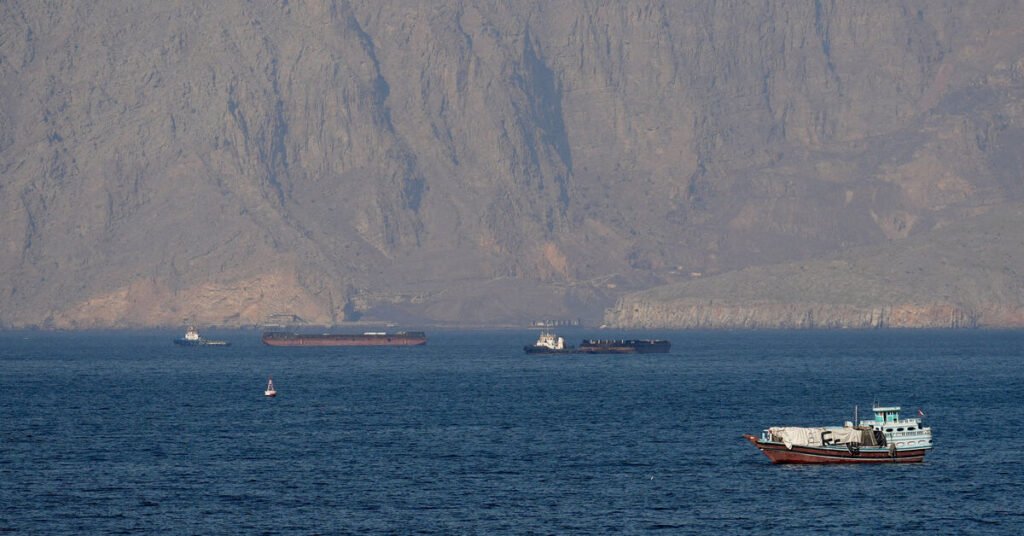
The United States government has taken decisive action in response to escalating tensions in the Middle East, announcing a new round of sanctions aimed at Iran. On July 10, 2023, the U.S. Treasury Department revealed that it had targeted a prominent financier associated with Iran’s Supreme Leader Mojtaba Khamenei, alongside 13 other individuals and entities linked to the Iranian regime. This move comes in the wake of Tehran’s recent military activities, specifically its renewed assaults on oil tankers navigating the strategically vital Strait of Hormuz.
The Strait of Hormuz is a critical maritime chokepoint through which a significant portion of the world’s oil supply is transported. The U.S. has expressed grave concern over Iran’s provocative actions in this region, which threaten not only the stability of global oil markets but also the safety of international shipping routes. The sanctions signify a robust attempt by Washington to hold Tehran accountable for its aggressive military posture and to deter further destabilizing activities.
Details of the Sanctions
The newly imposed sanctions specifically target individuals and entities that are believed to play pivotal roles in financing the Iranian government and its military operations. Among those sanctioned is a key financier identified as being closely aligned with Khamenei, who has been instrumental in funneling resources to support Iran’s ongoing military campaigns and regional influence operations. The sanctions are designed to freeze any U.S. assets held by these individuals and prohibit American citizens and entities from engaging in transactions with them.
In a statement, U.S. Treasury Secretary Janet Yellen emphasized that these actions are part of a broader strategy to counter Iran’s destabilizing activities. “We are committed to using every tool at our disposal to hold the Iranian regime accountable for its reckless behavior,” she asserted, underscoring the U.S. government’s determination to protect its interests and allies in the region.
Escalation of Hostilities
The sanctions are a direct response to Iran’s recent military provocations, which have included a series of attacks on commercial vessels in the Strait of Hormuz. These incidents have raised alarms among shipping companies and governments worldwide, prompting calls for increased maritime security and a more unified international response to Iran’s aggressive tactics.
Iran has defended its actions as necessary for safeguarding its national interests, claiming that the presence of foreign military forces in the region poses a direct threat to its sovereignty. However, the U.S. and its allies view these justifications as mere pretexts for Iran’s expansionist ambitions and its attempts to exert control over crucial shipping lanes.
International Reactions
The international community has expressed varying perspectives on the U.S. sanctions. Some allies, particularly in Europe, have called for a diplomatic approach to address the tensions, advocating for dialogue as a means to de-escalate the situation. Conversely, regional partners in the Gulf, particularly those who have been directly impacted by Iranian aggression, have largely supported the U.S. stance and the imposition of sanctions as necessary measures to curb Iran’s influence.
As the situation continues to evolve, analysts warn that the potential for further conflict remains high. The U.S. administration is under pressure to ensure that these sanctions effectively deter Iran while also safeguarding the interests of its allies in the region. The ongoing tensions underscore the fragile balance of power in the Middle East and the critical importance of maintaining security in key maritime routes.
In conclusion, the recent U.S. sanctions against Iran reflect a significant escalation in the ongoing conflict between Washington and Tehran. With both sides entrenched in their positions, the path forward remains uncertain, and the implications of these actions are likely to reverberate throughout the region and beyond.
This article was originally aggregated from the source listed below.
Read Full Article on Al-Monitor – Middle East Politics & News →