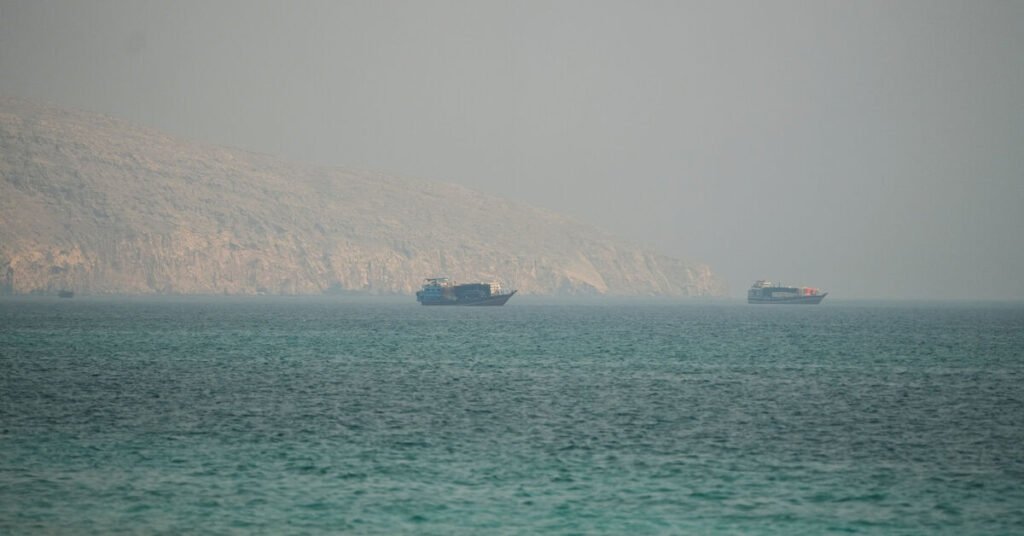
In a significant escalation of tensions in the Persian Gulf, the United States military has confirmed the initiation of further strikes against Iranian targets in response to an attack on a commercial vessel in the strategically vital Strait of Hormuz. This development follows a series of confrontations that have raised alarms over maritime security in one of the world’s most crucial shipping lanes.
The U.S. strikes were launched after the Islamic Revolutionary Guard Corps (IRGC) targeted a container ship on July 9, an incident that has been characterized by U.S. officials as an unprovoked act of aggression. The vessel, identified as the MV Maersk Alabama, sustained damage but managed to continue its journey, underscoring the high stakes involved in this latest chapter of U.S.-Iranian hostilities.
Details of the Incident
According to reports from U.S. military sources, the IRGC utilized advanced weaponry in the attack, which took place in international waters of the Strait of Hormuz, a narrow passage through which approximately 20% of the world’s oil supply is transported. The U.S. Navy, which has been actively patrolling the region, responded swiftly to the incident, launching precision strikes targeting IRGC facilities believed to be involved in the attack.
U.S. Military Response
In a statement released from the Pentagon, officials emphasized that the military actions were a necessary measure to safeguard international shipping routes and to deter further Iranian aggression. “The U.S. will not tolerate threats to maritime navigation and will take all necessary steps to ensure the safety of our allies and partners in the region,” said a senior military official who spoke on the condition of anonymity.
The strikes have reportedly targeted launch sites and command centers used by the IRGC, with the goal of degrading their capacity to conduct similar operations in the future. Eyewitness accounts from the region indicate that explosions were heard, and smoke was seen rising from the vicinity of the targeted sites, confirming the scale of the military response.
Regional Reactions
The Iranian government has condemned the U.S. strikes, labeling them as a violation of international law and a dangerous escalation of hostilities. Iranian officials have vowed to retaliate, warning that such military actions could lead to a broader conflict in the region. “The United States will bear the consequences of its reckless behavior,” stated an Iranian Foreign Ministry spokesperson.
Regional allies of the U.S., including Gulf Cooperation Council (GCC) members, have expressed their support for the U.S. military actions, highlighting the need for a unified stance against Iranian provocations. “The security of the Gulf is integral to our national interests, and we stand with the U.S. in ensuring that freedom of navigation is preserved,” said a GCC official.
Potential Implications
The ongoing hostilities have the potential to significantly impact global oil markets, which are already sensitive to geopolitical tensions. Analysts warn that any prolonged conflict could disrupt oil supplies and lead to increased prices, further straining economies still recovering from the impacts of the COVID-19 pandemic.
As the situation continues to develop, the U.S. military remains on high alert, prepared for further engagements if necessary. The international community is closely monitoring the situation, with calls for restraint and diplomatic efforts to de-escalate tensions in the region gaining urgency.
In conclusion, the recent U.S. military strikes against Iranian targets mark a critical juncture in the ongoing conflict, with potential ramifications that extend beyond the immediate region. The world watches closely as both nations navigate a path that could either lead to further conflict or opportunities for diplomatic resolution.
This article was originally aggregated from the source listed below.
Read Full Article on Al-Monitor – Middle East Politics & News →