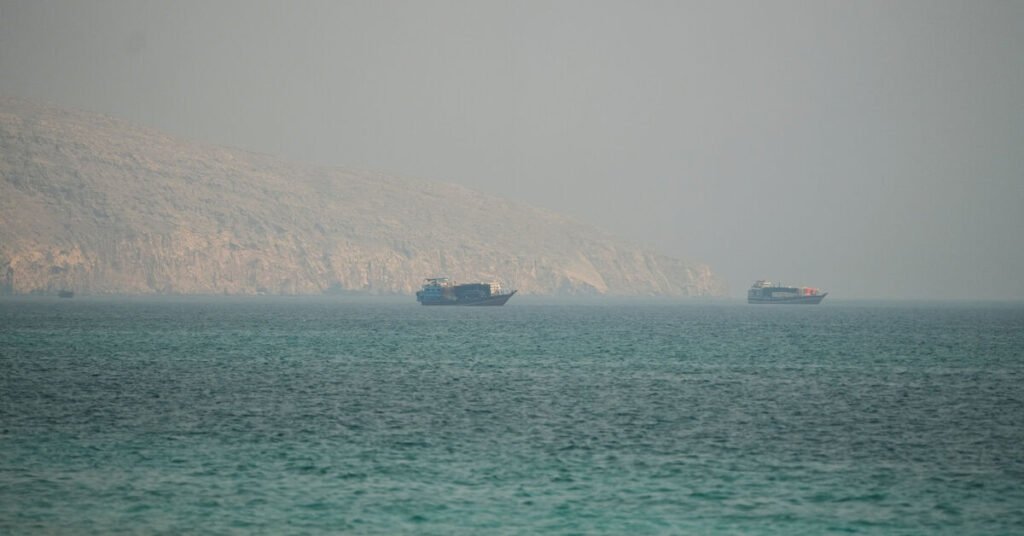
In a significant escalation of tensions in the Middle East, the United States military has conducted airstrikes against Iranian targets following an attack on a container ship attributed to Iran. This military response, which took place on Sunday, further complicates an already volatile situation in the region, particularly concerning the strategic Strait of Hormuz, a crucial maritime route for global oil shipments.
The U.S. strikes were aimed at specific sites linked to the Iranian military and were described by Pentagon officials as a necessary measure to protect international shipping and maintain freedom of navigation in the waters of the Persian Gulf. This military action comes in the wake of Iran’s alleged attack on the container vessel, which was reportedly struck while transiting through the Gulf waters. The incident raised alarms about the safety of commercial shipping in one of the world’s most vital maritime corridors.
In response to the strikes, Iranian officials declared that they had once again closed the Strait of Hormuz, asserting that their military would enforce security in the area. This announcement has sent shockwaves through the Gulf states, prompting fears of a broader conflict that could disrupt not only regional but also global oil supplies. The Strait of Hormuz is a narrow passageway through which approximately 20% of the world’s oil passes, making it a focal point of international trade and security concerns.
The Iranian government, led by President Ebrahim Raisi, condemned the U.S. strikes, labeling them as acts of aggression that would not go unanswered. In a televised address, Raisi emphasized Iran’s commitment to safeguarding its interests and sovereignty, stating, “We will not allow our waters to be threatened by foreign powers.” The Iranian Revolutionary Guard Corps (IRGC) has also vowed to take necessary actions to protect the nation’s maritime borders.
As the situation unfolds, several Gulf states are closely monitoring the developments. Nations such as Saudi Arabia, the United Arab Emirates, and Qatar have expressed concerns over the potential for increased hostilities and the implications for regional stability. Analysts suggest that a conflict in the Gulf could have dire consequences for the global economy, particularly in energy markets, where oil prices could see significant fluctuations in response to heightened tensions.
The U.S. administration, while justifying its military actions as a deterrent against Iranian aggression, faces challenges in managing the delicate balance of power in the region. Diplomatic efforts to de-escalate the situation may be complicated by the historical distrust between Washington and Tehran, which has been exacerbated by years of sanctions and military posturing.
As military assets are repositioned and regional allies rally, the international community is urged to remain vigilant. The potential for miscalculation or unintended escalation remains high, and the stakes are significant not only for the countries directly involved but also for global trade and security. The coming days will likely be critical in determining whether a path toward de-escalation can be forged or if the region is on the brink of a more extensive conflict.
In conclusion, the recent U.S. strikes against Iran mark a pivotal moment in the ongoing saga of U.S.-Iran relations, with implications that extend far beyond the immediate conflict. The situation remains fluid, and the world watches closely as developments unfold in this strategically vital region.
This article was originally aggregated from the source listed below.
Read Full Article on Al-Monitor – Middle East Politics & News →