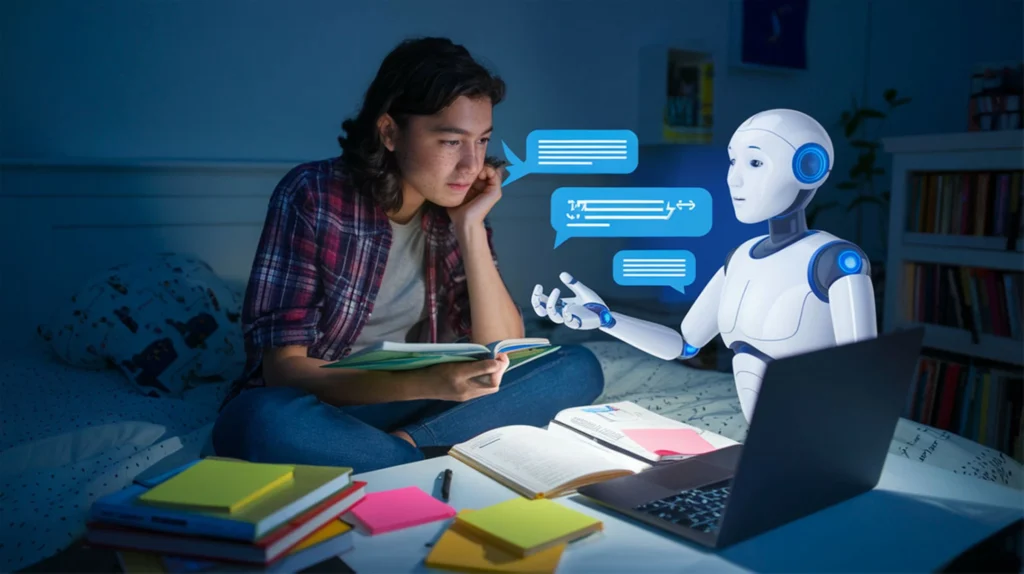
AI Tutors: The Language Dilemma in Education
As artificial intelligence (AI) continues to permeate various sectors of society, its role in education is becoming increasingly prominent. The prospect of AI tutors that can provide personalized learning experiences for children is both exciting and daunting. These digital educators promise to enhance learning by offering round-the-clock support, instant feedback, and tailored instruction. However, they also raise pressing questions about language, identity, and cultural sensitivity—particularly when it comes to the languages spoken in the home.
The New Age of Tutoring
Imagine a scenario where a child struggles with English grammar late at night. An AI tutor, equipped with advanced algorithms, steps in to gently correct errors, ensuring that learning continues even when human educators are unavailable. This scenario is becoming a reality, with AI technologies being developed to assist children in their educational journeys. These tools are designed to be patient, energetic, and responsive, providing support that traditional tutoring methods may lack.
Yet, as we embrace the benefits of AI in education, we must confront the implications of its use. One significant concern is the potential for AI tutors to inadvertently promote a singular view of language and communication. The subtlety in the way these digital educators interact with children can lead to the reinforcement of specific linguistic norms while marginalizing others. In this context, the question arises: whose language does the AI tutor speak?
The Influence of Home Language
For many children, the language spoken at home is a crucial part of their identity. It reflects their culture, heritage, and familial bonds. However, when an AI tutor interacts predominantly in a standard form of English, it may send implicit messages about the validity of the child’s home language. This can create a sense of inadequacy or confusion for young learners who may feel that their natural way of speaking is deemed inferior.
- Cultural Sensitivity: AI systems must be designed with an understanding of the diverse linguistic backgrounds of students. This includes recognizing the nuances of various dialects and language variations that exist within English itself.
- Inclusive Programming: Developers need to ensure that AI tutors are programmed to appreciate and respect the linguistic diversity of their users, potentially incorporating multilingual capabilities or dialect recognition to foster inclusivity.
- Feedback Mechanisms: It is essential for AI tutors to provide constructive feedback that encourages students to embrace their home language while also learning standardized forms of communication.
The Road Ahead
As educational institutions increasingly adopt AI tutoring systems, stakeholders—parents, educators, and technologists—must engage in thoughtful dialogue about the implications of these tools. There is a pressing need for collaboration in developing AI that respects and uplifts the linguistic diversity of students. This involves not only refining the technology but also ensuring that educators are equipped to address the complexities that arise from AI’s influence on language learning.
In conclusion, while AI tutors hold great promise for enhancing educational outcomes, it is critical to consider the broader implications of their use. The challenge lies in creating an environment where children can thrive academically without losing the richness of their linguistic identities. As we stand on the brink of this new educational frontier, the question remains: how can we ensure that AI speaks the language of all our children?
This article was originally aggregated from the source listed below.
Read Full Article on Gulf Today – Latest News →